Sponsored article
Why Does Flat Packing of Cardboard POS Displays Reduce Costs and Simplify Retail Operations?
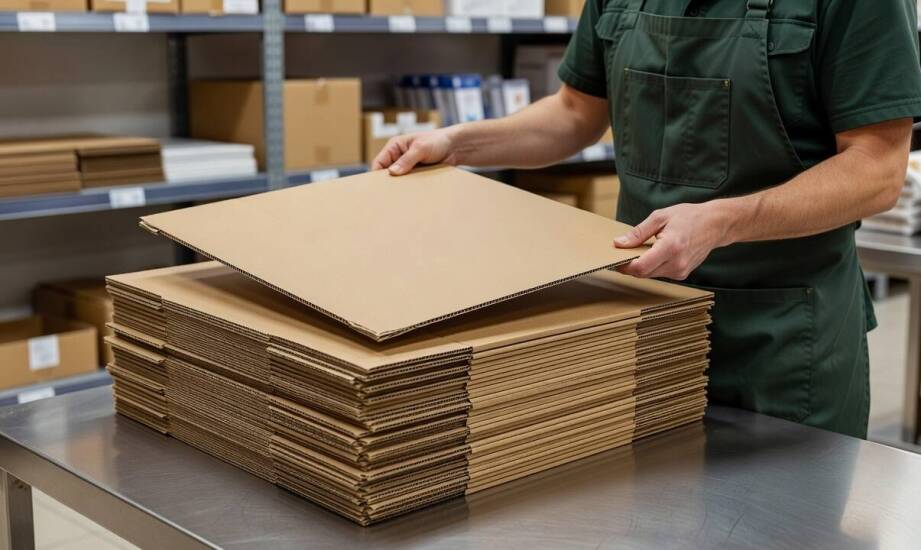
- Reduced Volume and More Efficient Palletisation
- Faster Store Rollouts and Seasonal Deployments
- Sustainability, PPWR Requirements and Packaging Optimisation
- Choosing the Right Logistics Format
- FAQ
- What is flat packing for POS displays?
- What are the main benefits of flat-packed POS displays?
- Are flat-packed POS displays difficult to assemble?
- When is flat-packed delivery the best choice?
- Does flat packing affect display durability?
- How does flat packing reduce warehousing costs?
- Can every POS display be delivered flat packed?
- How does flat packing support sustainability goals?
- Are corrugated cardboard displays recyclable?
- How should businesses choose the best logistics format for POS displays?
A promotional campaign using POS displays starts long before shoppers see the featured product in-store. Transportation from the manufacturing facility, storage in regional distribution centres, and the rollout process across retail locations often account for a significant share of the overall campaign budget.
Read more: Building entrance doormats – a key element of floor protection in public buildings
Flat-packed cardboard display solutions directly impact all of these cost areas by reducing shipment volume and streamlining logistics processes. By optimising the delivery format, companies can allocate more of their budget to product promotion, creative design, and high-quality printing rather than paying to transport unused air.
Read more: Why Are Aluminum Profiles Key to the Durability of Building Entry Mats for Offices?
As freight costs continue to rise and sustainability requirements gain importance, designing efficient POS logistics has become a crucial factor in retail profitability.
Read more: Key Aspects of Privacy Law for IT Firms
Reduced Volume and More Efficient Palletisation
Logistics is often one of the most expensive elements of nationwide and international retail campaigns.
Flat packing allows significantly more display units to fit on a standard pallet or within a truck trailer compared with fully assembled structures. In many projects, this can lead to substantial reductions in transportation and handling costs.
A well-designed cardboard POS display occupies only a fraction of its final assembled volume during transport. This not only simplifies palletisation but also helps reduce the risk of mechanical damage throughout multiple handling stages.
Flat-packed components can be stacked more safely and evenly, helping protect printed graphics from scratches and preventing damage to sensitive structural edges.
Lower shipment volume also makes warehouse storage considerably more efficient between campaign waves. Retailers and distributors can store larger quantities of displays within the same warehouse footprint, reducing the need for additional storage space.
Flat-packed deliveries also improve inventory rotation. Instead of moving large assembled structures, store personnel can handle compact packages that are easier to transport within backroom areas and stockrooms.
Faster Store Rollouts and Seasonal Deployments
Separating transportation from final assembly means that display setup takes place directly at the point of sale. However, this approach often simplifies campaign execution by reducing the need for external installation teams.
Many standard POS display models can be assembled within minutes, depending on the complexity of the design. Clear assembly instructions, visual guides, or QR-code-linked videos further streamline the process for retail staff.
Some product categories require additional consideration. Heavy glass-packaged cosmetics, consumer electronics, premium beverages, and similar products may require reinforced shelves, internal supports, or partially pre-assembled structures to maintain stability.
Additional reinforcement elements can help ensure safe product presentation while preserving the logistical advantages of flat-packed delivery.
For seasonal campaigns such as Christmas promotions, back-to-school launches, or nationwide product rollouts, flat-packed solutions are particularly effective. Retail chains often distribute hundreds of identical displays to multiple locations simultaneously.
Store teams can assemble displays on-site precisely when the campaign begins, enabling rapid implementation while maintaining brand consistency across locations.
Sustainability, PPWR Requirements and Packaging Optimisation
Reducing unused transport space also aligns with broader sustainability objectives and packaging optimisation strategies.
The European Packaging and Packaging Waste Regulation (PPWR) encourages businesses to reduce unnecessary packaging and improve resource efficiency throughout supply chains. As a result, retailers and manufacturers increasingly look for logistics solutions that minimise wasted cargo space and optimise transport efficiency.
The use of corrugated cardboard and mono-material packaging solutions can support recycling efforts and reduce dependence on plastic packaging components.
However, environmental performance should always be assessed based on the complete packaging system and its lifecycle rather than solely on the material used.
Industry experience, including projects delivered by BoxPro Polska, shows that the sustainability of a POS solution depends on the overall design, manufacturing process, transport requirements, usage period, and end-of-life recycling options.
A carefully engineered display without unnecessary fillers or difficult-to-separate materials can contribute to improved performance in sustainability audits and ESG reporting.
Choosing the Right Logistics Format
Flat-packed delivery remains one of the most effective logistics solutions for large-scale retail rollouts and short-term promotional campaigns.
Key advantages include:
Reduced transportation costs
Better utilisation of available cargo space
Easier warehousing and inventory management
Lower risk of damage during transport
Faster deployment across multiple locations
At the same time, partially assembled solutions may offer additional benefits for complex displays, heavy merchandise, or projects where assembly errors could affect the presentation of products.
Selecting the optimal format requires analysing the entire supply chain, from manufacturing and warehousing to transportation, installation, and end-of-life disposal.
Practical experience shows that the most cost-effective solution is not always the same for every campaign. The best results come from matching the logistics format to the specific objectives and operational requirements of the project.
FAQ
What is flat packing for POS displays?
Flat packing means delivering POS displays as unassembled components that are assembled at the point of sale. This significantly reduces transport volume and improves logistics efficiency.
What are the main benefits of flat-packed POS displays?
The primary advantages include lower transportation costs, easier storage, higher pallet efficiency, and reduced risk of damage during shipping.
Are flat-packed POS displays difficult to assemble?
No. Most modern POS display systems are designed for quick assembly by store personnel. Assembly is often supported by printed instructions, diagrams, or QR-code-linked video tutorials.
When is flat-packed delivery the best choice?
Flat-packed displays are particularly suitable for nationwide campaigns, seasonal rollouts, and projects involving large numbers of retail locations where transport and storage costs significantly affect the overall budget.
Does flat packing affect display durability?
Not if the display has been properly engineered. Once assembled, the structure should maintain the strength and functional characteristics intended by the manufacturer.
How does flat packing reduce warehousing costs?
Because each logistics unit occupies less space, more displays can be stored within the same warehouse area. This improves storage efficiency and inventory management.
Can every POS display be delivered flat packed?
Not always. Very large displays or structures designed for heavy products may require partial pre-assembly to ensure stability and safe use.
How does flat packing support sustainability goals?
Reduced shipment volume allows more efficient use of cargo space, potentially lowering transportation requirements and helping reduce the environmental impact of logistics operations.
Are corrugated cardboard displays recyclable?
In most cases, yes. Displays manufactured from mono-material corrugated cardboard generally offer particularly good recyclability when separated and disposed of according to local recycling requirements.
How should businesses choose the best logistics format for POS displays?
The decision should consider campaign size, number of retail locations, product type, warehouse capacity, assembly requirements, and logistics budget. Analysing the entire supply chain typically delivers the most effective results.
Article categories
You might be interested

Car detailing products – Where to start with regular car maintenance?
Taking care of a car is not only a matter of aesthetics but also a way to maintain its value over time. Systematic maintenance helps reduce wear and tear of parts and protects surfaces from external factors. The right approach to cleaning and preservation ensures that the car looks better and remain

Why do pork cheeks work well in slow-cooked dishes?
Dishes prepared over many hours continue to enjoy unwavering popularity in kitchens across various regions of the world. Slow cooking allows for the extraction of deep flavors and achieves the desired meat texture, which cannot be attained with quick cooking methods. This is why certain cuts are esp