Sponsored article
Bolesławiec Pottery Pattern Codes: How to Build a Matching Tableware Collection
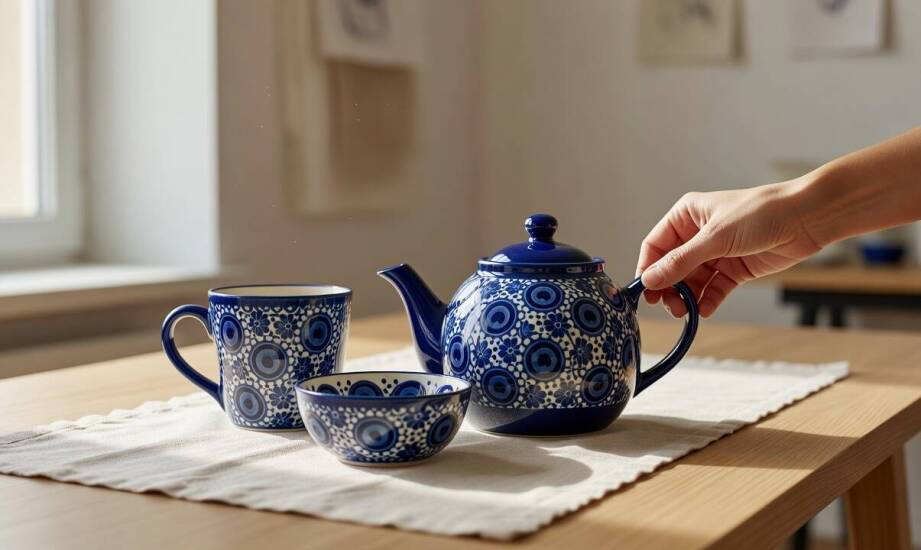
- What Do Bolesławiec Pottery Pattern Codes Mean?
- Why Is One Pattern Code Useful When Building a Collection?
- Does the Same Code Mean Every Piece Will Look Identical?
- How Can You Build a Tableware Set Using Pattern Codes?
- Building a Collection Around Pattern 70MI
- How Do Patterns Such as 61A and DPLC Work?
- Do You Need to Use Only One Pattern?
- One Pattern or a Mix-and-Match Collection?
- Why Are Pattern Codes Helpful When Buying Gifts?
- Pattern Codes at Manufaktura in Bolesławiec
- How to Build a Coherent Bolesławiec Collection Over Time
Building a Bolesławiec pottery collection does not have to mean buying a complete dinner set at once. Many people start with a favourite mug, plate or bowl and gradually add new pieces over time.
Pattern codes make this process much easier. Codes such as 70MI, 61A or DPLC identify particular decorative designs used across different ceramic forms. By following the same code, you can find mugs, plates, bowls, serving pieces and tea accessories that share the same visual style.
This makes pattern codes particularly useful when you want your collection to remain coordinated while allowing it to grow gradually.
What Do Bolesławiec Pottery Pattern Codes Mean?
In the Bunzlau Manufaktura collection, individual decorative designs are identified using letter-and-number codes.
Examples include:
70MI;
61A;
DPLC;
AS81;
JZ68;
GZ44.
These codes help distinguish one decorative design from another.
When browsing boleslawiec poland pottery, checking the pattern code can therefore be more reliable than trying to remember a design only by colour or appearance.
This is particularly useful because many Bolesławiec patterns share similar visual elements, including cobalt blue, dots, flowers, leaves and repeated stamped motifs.
A code gives you a much more precise reference point.
Why Is One Pattern Code Useful When Building a Collection?
The same decorative pattern can appear on very different ceramic forms.
A code such as 70MI, for example, can be found on several types of tableware and tea accessories. The same applies to patterns such as 61A and DPLC.
This means that you do not need to buy every piece at the same time.
You can begin with the items you use most frequently and expand the collection later.
For example, a coordinated set might gradually include:
mugs;
cups and saucers;
breakfast plates;
dinner plates;
bowls;
serving platters;
sugar bowls;
creamers;
teapots;
ceramic warmers.
The shape and function of the pieces can change while the decorative language remains consistent.
That is what makes pattern codes especially useful for people who prefer to build their tableware collection over several years.
Does the Same Code Mean Every Piece Will Look Identical?
Not completely.
Bolesławiec ceramics are decorated by hand, so pieces carrying the same pattern code may still show subtle differences.
The stamping technique allows artisans to repeat the same design, but manual application naturally introduces small variations in:
the position of individual stamps;
spacing between motifs;
pressure applied during stamping;
colour intensity;
small brush-painted details.
These differences do not mean that the pieces belong to different patterns.
They are a natural part of hand-decorated pottery.
A plate and a mug carrying the same code should clearly belong to the same decorative family, even if individual details are not positioned with machine-level uniformity.
This combination of consistency and subtle variation is one of the distinctive characteristics of Bolesławiec stoneware.
How Can You Build a Tableware Set Using Pattern Codes?
The easiest approach is to begin with the pieces used most often.
For a basic breakfast collection, this might mean:
two or four mugs;
small plates;
bowls;
cups and saucers.
Once these everyday pieces are established, you can add serving items in the same pattern.
A larger collection might later include a teapot, serving bowl, platter, sugar bowl or creamer.
The important point is that a matching table does not require every item to have the same shape.
A tall mug, flat dinner plate and rounded serving bowl can still create a coherent arrangement when they share the same decorative pattern.
Building a Collection Around Pattern 70MI
The 70MI pattern is a good example of how one decorative code can connect different products.
The current collection includes several types of pieces carrying this designation, including cups, plates and tea accessories.
This allows you to begin with a single item and later search for additional pieces using the same code.
For example, someone who initially buys a 70MI mug might later add:
a matching plate;
a sugar bowl;
a creamer;
a teapot;
a ceramic warmer.
The result feels coordinated even though each object has a different function and silhouette.
How Do Patterns Such as 61A and DPLC Work?
The same principle applies to other decorative families.
61A appears across different tableware forms, including mugs, plates and bowls.
DPLC can also be found on several pieces such as plates, cups with saucers and serving items.
Using the code therefore makes shopping considerably easier than comparing photographs and trying to decide whether two visually similar decorations are actually the same design.
It can also be helpful when replacing a piece.
If you know the code of the pattern in your collection, you have a much clearer search term when looking for another item in the same style.
Do You Need to Use Only One Pattern?
No.
Pattern codes make it possible to build a perfectly matching collection, but Bolesławiec pottery also works very well when different designs are mixed.
Many patterns share characteristic elements such as:
cobalt blue;
cream-coloured stoneware;
stamped dots;
floral motifs;
leaves;
geometric arrangements.
This means that two different codes can still look harmonious when their colours or decorative density are similar.
A mixed collection may actually emphasise the handcrafted nature of the pottery.
For example, you might use one dominant pattern for dinner plates and introduce a second pattern through mugs or bowls.
One Pattern or a Mix-and-Match Collection?
The choice depends on the visual effect you want.
One pattern code
Using a single code is ideal when you prefer:
a highly coordinated table;
an easy purchasing system;
predictable colour combinations;
simple replacement of individual pieces.
It can also work particularly well for a gift collection, because the recipient can later expand it using the same pattern reference.
Several related patterns
Mixing codes works well when you prefer:
a more informal table;
greater visual variety;
gradual collecting based on individual pieces;
combinations of different Bolesławiec motifs.
In this case, it is useful to look for a common element such as cobalt blue, similar floral decoration or comparable pattern density.
Why Are Pattern Codes Helpful When Buying Gifts?
Bolesławiec pottery is often purchased gradually, which makes individual pieces useful as gifts.
If someone already collects a particular pattern, knowing its code helps you choose an item that fits their existing tableware.
Instead of buying another identical mug, for example, you might choose:
a serving bowl;
a sugar bowl;
a platter;
a cup and saucer;
a teapot.
As long as the pattern code matches, the new item can extend the collection without changing its overall style.
This also gives future gift-givers an easy reference for subsequent occasions.
Pattern Codes at Manufaktura in Bolesławiec
Manufaktura in Bolesławiec offers hand-decorated ceramics across numerous pattern families and product types.
Codes such as 70MI, 61A and DPLC appear alongside the names of different products, making it easier to recognise which pieces belong to the same decorative design.
This is especially helpful because one pattern can be used across products with very different functions.
A collection can therefore grow according to the way a household actually uses its tableware rather than according to a predefined boxed set.
You might start with mugs and plates, add bowls when needed and only later decide to include larger serving pieces.
How to Build a Coherent Bolesławiec Collection Over Time
Pattern codes are most useful when treated as a practical guide rather than a strict rule.
If you want a consistent collection:
identify the pattern code you already own or like;
search for additional products using the same code;
choose the forms you actually need;
expand the collection gradually.
If you prefer a more eclectic table, use codes to recognise individual patterns and then combine several designs with related colours or motifs.
The advantage of the system is that it makes both approaches easier.
You can create a uniform dinner service or deliberately mix different Bolesławiec decorations while still knowing exactly which pattern each piece belongs to.
For collectors and everyday users alike, pattern codes provide a simple way to organise a growing collection without losing the handcrafted character that makes Bolesławiec pottery distinctive.
Article categories
You might be interested

Car detailing products – Where to start with regular car maintenance?
Taking care of a car is not only a matter of aesthetics but also a way to maintain its value over time. Systematic maintenance helps reduce wear and tear of parts and protects surfaces from external factors. The right approach to cleaning and preservation ensures that the car looks better and remain

Why do pork cheeks work well in slow-cooked dishes?
Dishes prepared over many hours continue to enjoy unwavering popularity in kitchens across various regions of the world. Slow cooking allows for the extraction of deep flavors and achieves the desired meat texture, which cannot be attained with quick cooking methods. This is why certain cuts are esp